

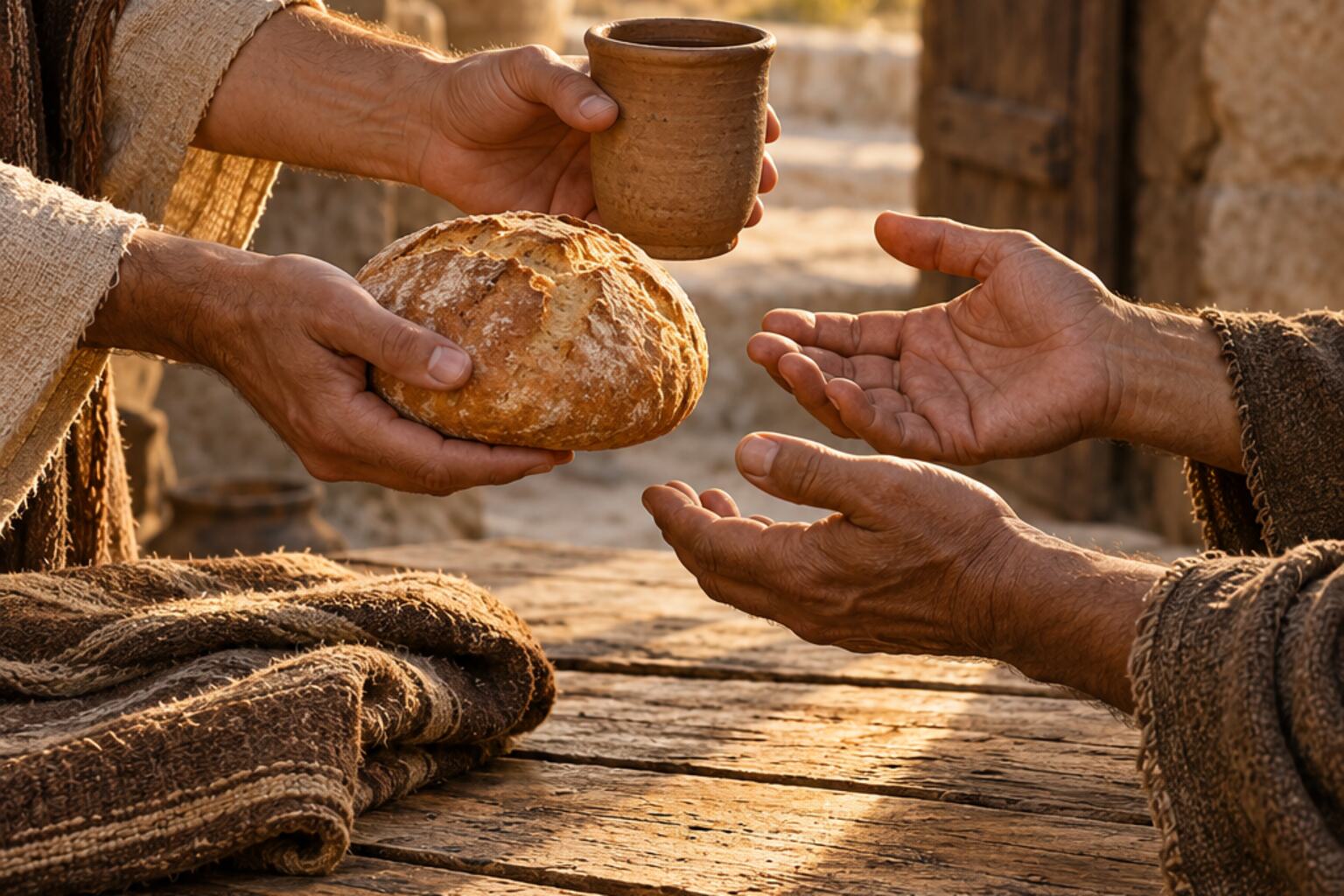
My little children, let us not love in word, neither in tongue; but in deed and in truth. -- 1 John 3:18 (KJV)
John starts at the cross. "Hereby perceive we the love of God, because he laid down his life for us: and we ought to lay down our lives for the brethren." In the next sentence he brings that love down to a brother who is short of what he needs.
"But whoso hath this world's good, and seeth his brother have need, and shutteth up his bowels of compassion from him, how dwelleth the love of God in him?"
The Man Who Saw
John's man already has "this world's good," and he has already seen the need. The verse does not stop to ask whether he noticed. He may feel for his brother and even say something kind. Then he shuts up his compassion and goes on with his day.
The KJV's "bowels" means the inward seat of feeling, the place pity starts. John's Greek noun shares a root with the verb Mark uses when Jesus was "moved with compassion" toward a kneeling leper. Jesus felt it and put out His hand. John's man feels it and closes it off.
John asks, "how dwelleth the love of God in him?" The question carries its own verdict.
Deed and Truth
"My little children, let us not love in word, neither in tongue." Word and tongue cost breath. You can mean the sympathy you offer and still leave a man exactly where you found him.
"But in deed and in truth." A deed costs something you own: an evening, a meal, money set aside for something else, an hour you meant for your own work. Truth means the help is genuine, not a show of mercy for onlookers.
Which brother's need have you already seen and left where it was? Take him the meal, the money or the hour this week, and let the explanation come after the gift.

